10 Different Wasp Species You’ll Find in Texas

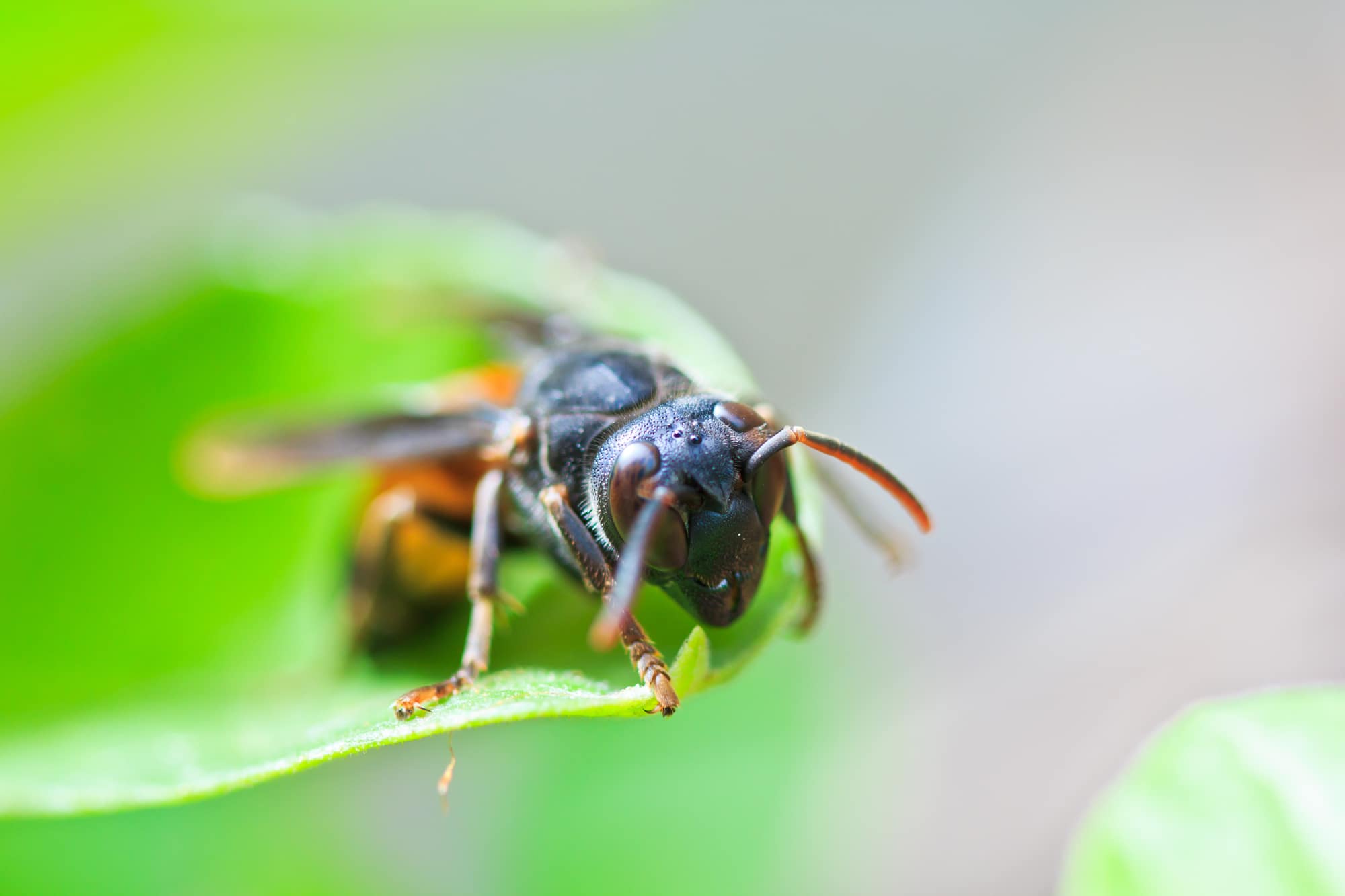
Texas is home to a fascinating variety of wasps, each with unique characteristics and behaviors.
From the common Paper Wasps to the intimidating Cicada Killer Wasps, these insects play important roles in our ecosystem.
While many Texans fear wasps for their painful stings, understanding the different species can help people avoid dangerous encounters and appreciate their ecological benefits.
The Lone Star State hosts several notable wasp families including the Vespidae (social wasps like Yellow Jackets and Bald-Faced Hornets) and Sphecidae (solitary hunters like the Great Golden Digger).
Mud Daubers build distinctive tube-like nests and rarely sting humans, while the Mexican Honey Wasp represents one of the few honey-producing wasp species in North America.
Each type has specific nesting habits, food preferences, and potential threat levels for humans.
1. Eastern Cicada Killer
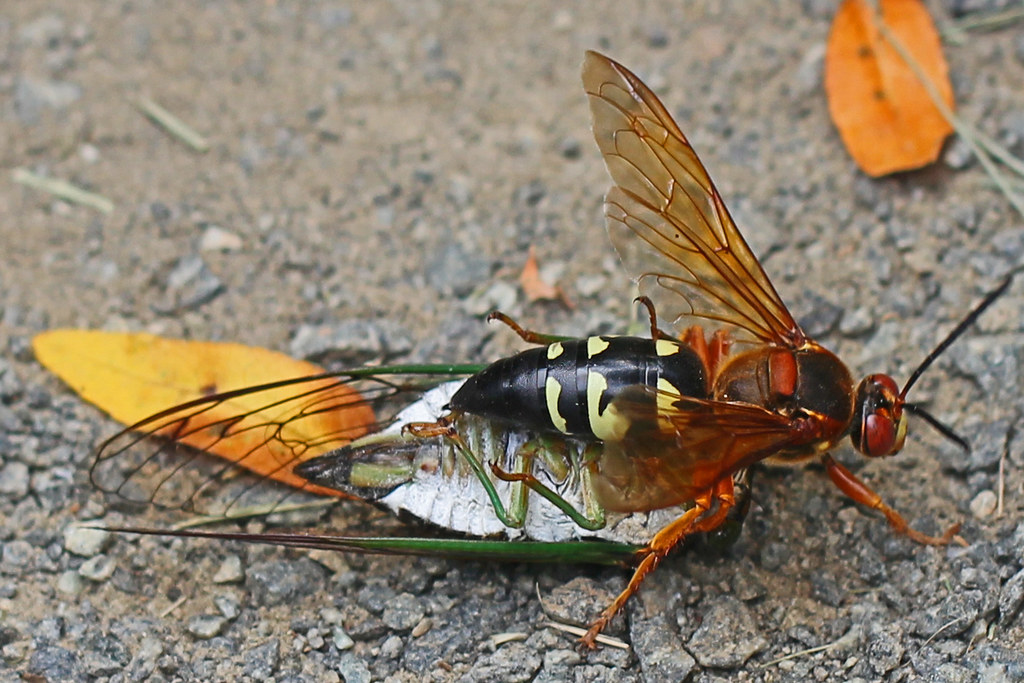
The Eastern Cicada Killer (Sphecius speciosus) is one of Texas’s largest wasps, measuring up to 1-½ inches in length.
Despite their intimidating size, these insects are generally non-aggressive toward humans.
These impressive wasps have a distinctive appearance with a black or dark brown body and yellow markings across the thorax.
Their large size often causes people to mistake them for “murder hornets,” though they are entirely different species.
Habitat & Behavior:
- Prefer sandy or loose soil for nesting
- Create underground burrows up to 10 inches deep
- Active during summer months (July-September)
- Males are territorial but cannot sting
- Females rarely sting unless directly handled
Cicada killers earned their name from their hunting behavior.
Female wasps paralyze cicadas with their sting, then carry them back to their underground nests. A single female can capture and store multiple cicadas.
Each burrow contains several chambers where the female places paralyzed cicadas.
She lays eggs on these cicadas, providing ready food for the larvae when they hatch.
Despite their fearsome appearance, these wasps serve as beneficial insects in Texas ecosystems.
They help control cicada populations naturally without posing significant risks to humans or pets.
Male cicada killers are often seen perched on flowers like black-eyed Susans, defending their territory from other males while waiting for females to emerge.
The presence of cicada killer wasps in a yard usually indicates a healthy ecosystem, though their burrows can sometimes disturb lawns or gardens.
2. Bald-faced Hornet
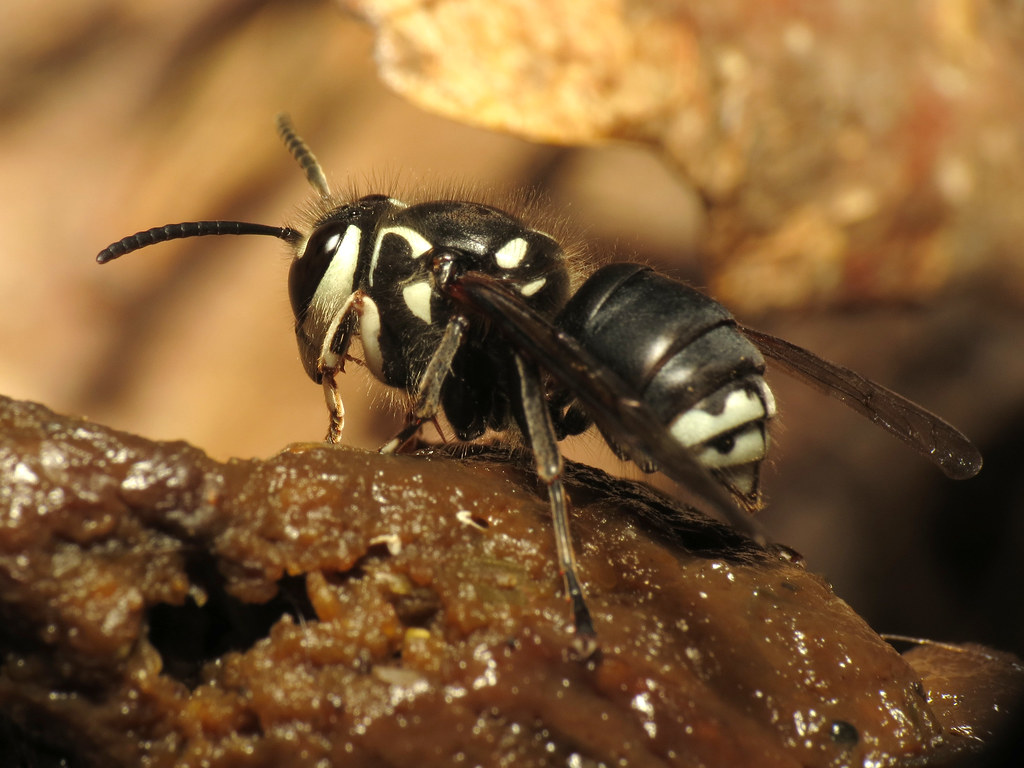
The Bald-faced Hornet (Dolichovespula maculata) is a striking insect that, despite its name, isn’t actually a true hornet.
It’s technically a type of yellow jacket wasp that’s common in Texas.
These insects are quite distinctive in appearance. They measure about 3/4 inch long and have a predominantly black body with prominent white markings, particularly on the face and abdomen.
The white or “bald” face is what gives this wasp its common name.
Bald-faced hornets build large, paper-like nests that can reach the size of a basketball or larger.
These gray, oval-shaped nests typically hang from tree branches, building eaves, or other sheltered areas.
Unlike some other wasps, bald-faced hornets are highly protective of their nests.
They will aggressively defend their colony if they perceive a threat, which can make them dangerous to homeowners.
Their sting is painful and, unlike honeybees, they can sting multiple times. Some people may experience severe allergic reactions to their venom.
Despite their intimidating nature, these wasps provide ecological benefits by controlling pest insect populations.
They feed on flies, caterpillars, and other insects that might damage gardens or crops.
If a nest is located in a high-traffic area, professional removal is recommended rather than attempting DIY methods.
Pest management professionals have the proper equipment and expertise to handle these aggressive insects safely.
3. European Hornet
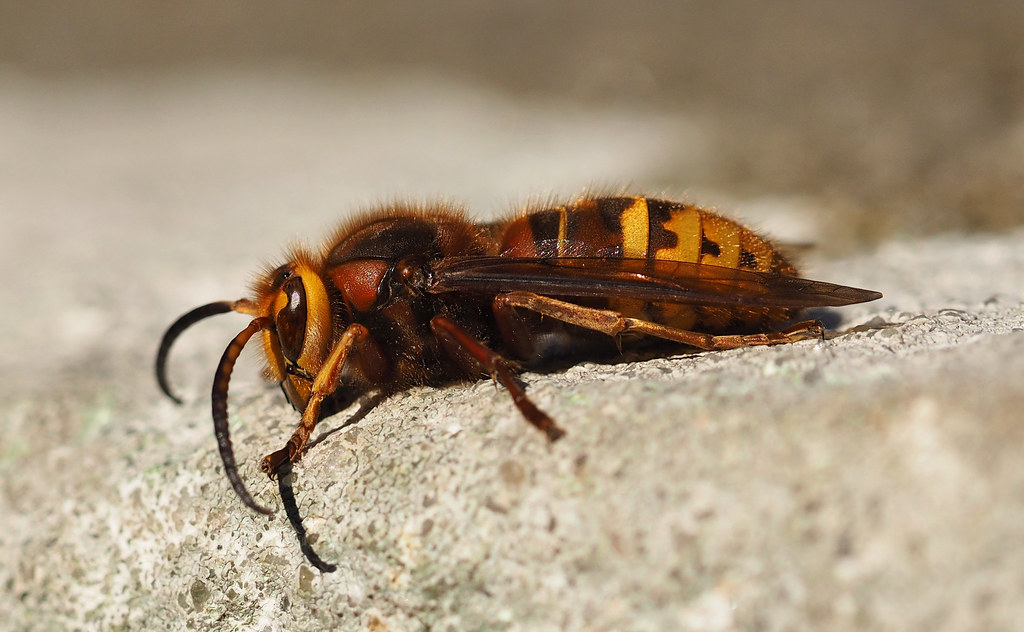
The European Hornet (Vespa crabro) is one of the largest wasps you might encounter in Texas.
These impressive insects measure between 3/4 to more than 1 inch in length, making them significantly larger than most other stinging insects in the region.
They have a distinctive appearance with a brown body adorned with yellow stripes and a whitish face.
Their coloration helps differentiate them from other similar wasps and hornets.
Nesting Habits:
- Hollow trees (natural preference)
- Wall voids in homes
- Attics and other sheltered areas
European Hornets are social wasps that build paper nests, much like their smaller cousins.
These nests can grow quite large over a season as the colony expands.
Unlike some aggressive wasp species, European Hornets tend to be less confrontational unless their nest is directly threatened.
However, caution is still advised as their stings can be painful and potentially dangerous to those with allergies.
These hornets are primarily nocturnal, which is unusual compared to other wasps.
They may be seen flying around lights at night, hunting for insects.
Their diet consists mainly of large insects, making them somewhat beneficial for pest control.
European Hornets typically establish new colonies each spring when queens emerge from hibernation.
A single colony can house hundreds of individuals by late summer when the population peaks.
4. Southern Yellowjacket
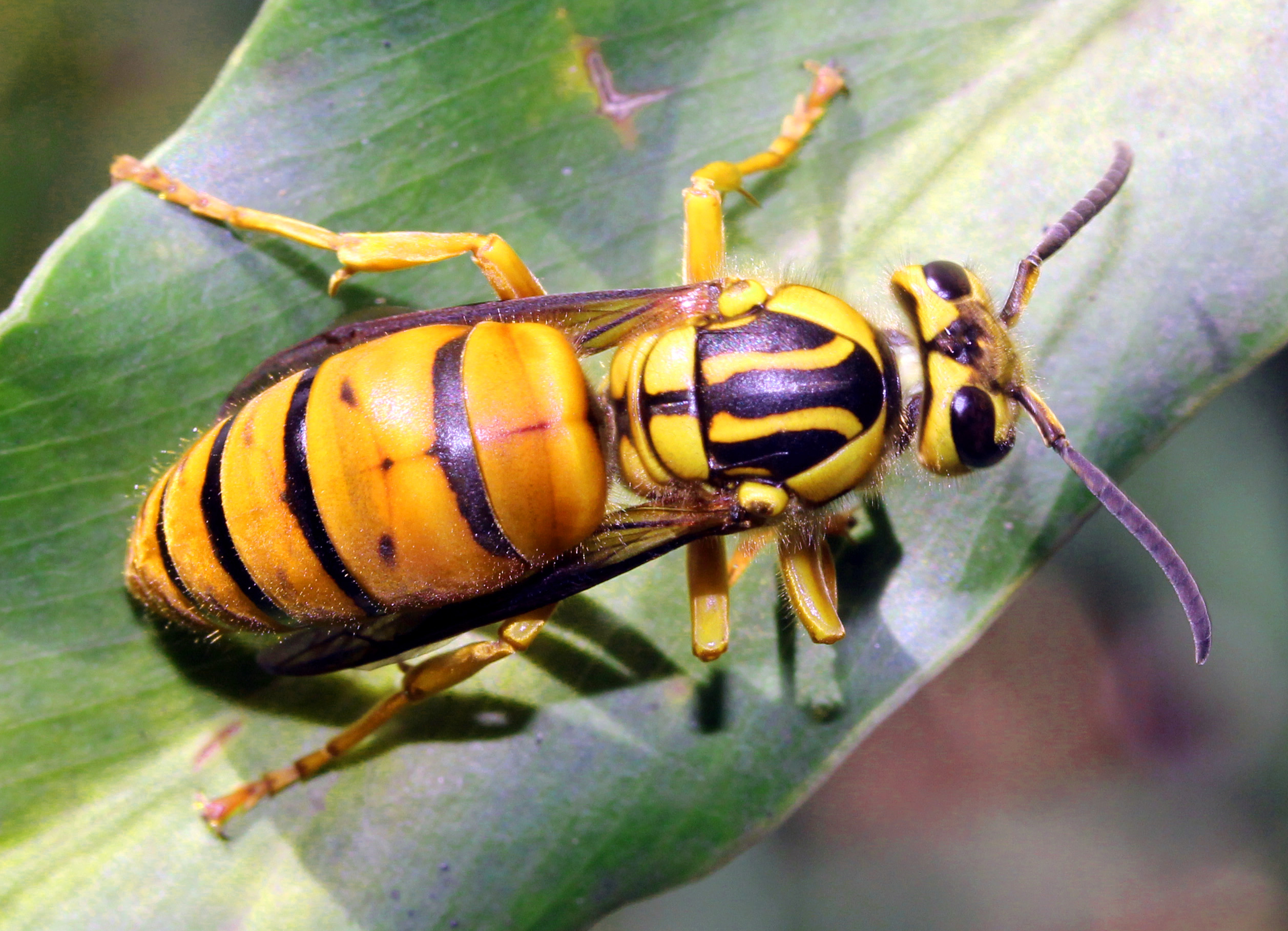
The Southern Yellowjacket (Vespula squamosa) is one of the most common stinging insects found in Texas.
This wasp species, scientifically known as Vespula squamosa, is particularly prevalent in central Texas.
These yellowjackets have distinctive black and yellow striped abdomens.
Their bodies measure approximately 12-14mm in length, making them noticeable but not overwhelming in size.
The queens are larger than the workers and have more prominent markings.
Southern Yellowjackets belong to the Vespidae family, which includes paper wasps and other yellowjacket species.
What makes them unique is their sometimes parasitic behavior – they can be “inquilines” or facultative social parasites of other yellowjacket species, particularly the Eastern Yellowjacket.
Nesting Habits:
- Build large paper nests, often underground
- May use abandoned rodent burrows
- Can also nest in wall voids or attics
- Colonies can contain thousands of individuals
Their life cycle resembles that of other yellowjackets in Texas.
They are predatory wasps that feed on other insects, making them beneficial for pest control. However, they can become aggressive when defending their nest.
People should exercise caution around Southern Yellowjacket nests.
Unlike some wasps, they can sting multiple times, and their stings are painful.
Those with allergies to wasp venom should be particularly careful and seek immediate medical attention if stung.
5. Paper Wasp
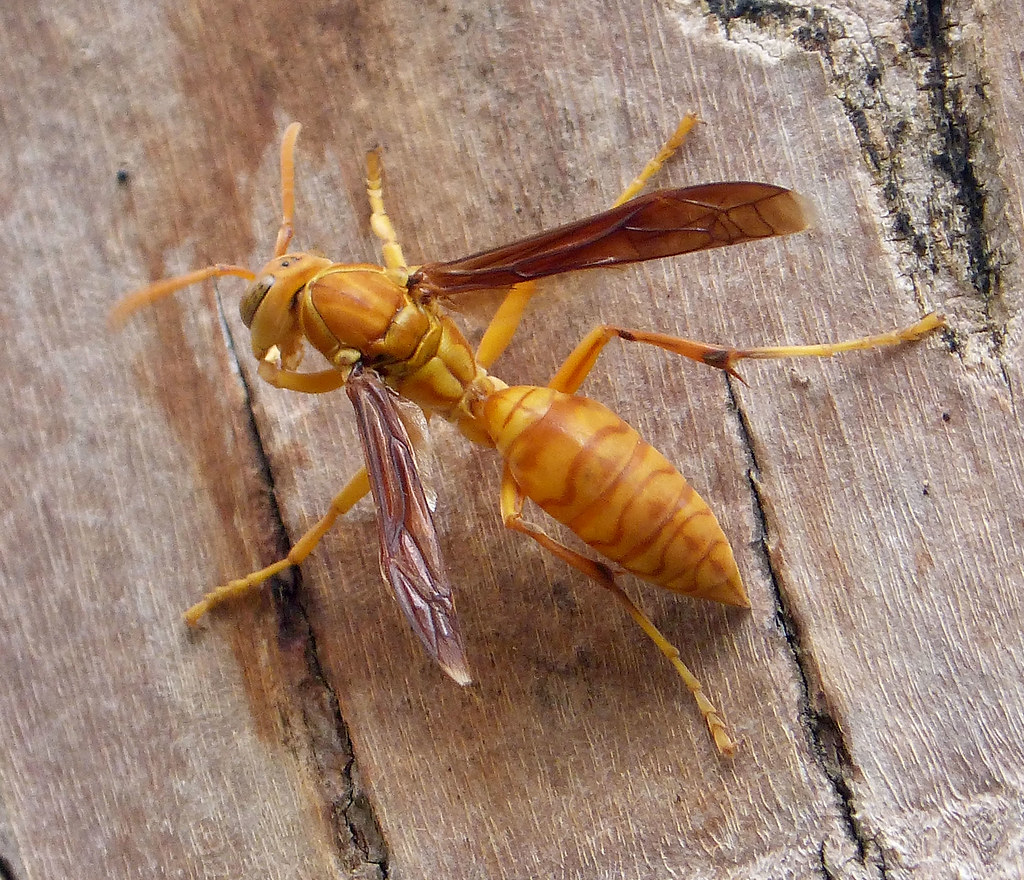
Paper wasps (Polistes spp.) are common social insects found throughout Texas.
They get their name from the paper-like material they use to build their distinctive nests, which feature open cells in a honeycomb pattern.
These nests are typically hanging from eaves, branches, or other sheltered areas.
These wasps have slender bodies with a narrow “waist” and range in color from reddish-brown to black with yellow markings.
They typically measure between ½ to 1 inch in length with relatively long legs that dangle when flying.
Paper wasps are generally less aggressive than other wasp species.
They show more tolerance toward humans around their nests compared to hornets or yellowjackets.
Several paper wasp species inhabit Texas, including:
- Polistes exclamans – Known for being less aggressive than other paper wasps
- Polistes apachus (Apache paper wasp) – Distinguished by its unique coloration
- Polistes dominula (European paper wasp) – An invasive species with black and yellow markings
Paper wasps build their characteristic nests from chewed wood pulp mixed with saliva. The hexagonal nest pattern is very distinctive.
Despite their intimidating appearance, paper wasps benefit gardens by consuming caterpillars and other pest insects.
A single colony can eliminate hundreds of plant-damaging caterpillars during a season.
If disturbed, paper wasps will defend their nests, so caution is advised when working near their colonies. Unlike bees, wasps can sting multiple times.
6. Red Wasp
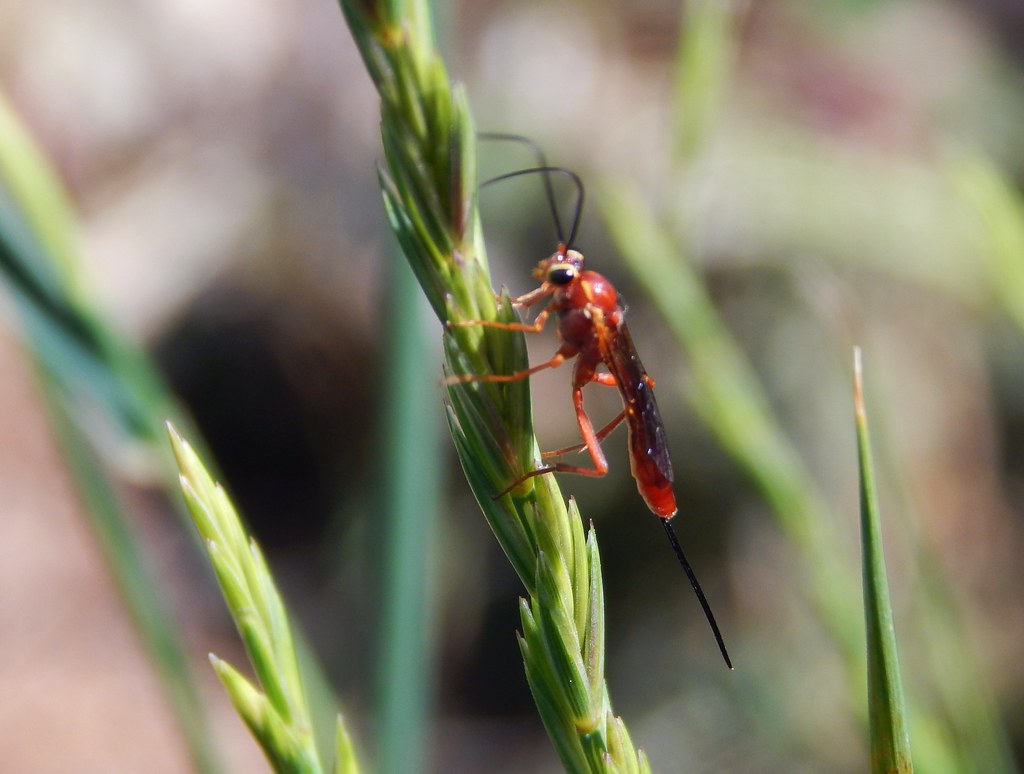
The Red Wasp (Polistes carolina) is one of two species of red paper wasps found in Texas and throughout the eastern United States.
These wasps are known for their distinctive reddish-brown coloration and slender bodies.
Red wasps typically measure between 3/4 to 1 inch long with a narrow waist and smoky black wings that they fold lengthwise when resting.
Their most distinctive feature is the fine ridges on their propodeum (rear segment), which helps distinguish them from similar species.
Habitat and Range:
- Common throughout Texas and southern U.S.
- Build paper nests under eaves, in attics, and other protected areas
- Most active during warm months (spring through fall)
Polistes carolina wasps are social insects that live in colonies. The queen starts building the nest in spring, and workers help expand it throughout the season.
These nests are made from chewed wood fibers mixed with saliva.
These wasps are territorial and will defend their nests when threatened.
Their stings can be painful and may cause allergic reactions in sensitive individuals. It’s best to maintain a safe distance from their nests.
Despite their intimidating reputation, red wasps serve as beneficial predators in the ecosystem.
They hunt caterpillars and other insects that damage garden plants, making them helpful for natural pest control.
To tell red wasps apart from similar species, look for the fine ridges on the propodeum, as opposed to the coarser ridges found on Polistes rubiginosus, the other red wasp species in Texas.
7. Great Golden Digger Wasp
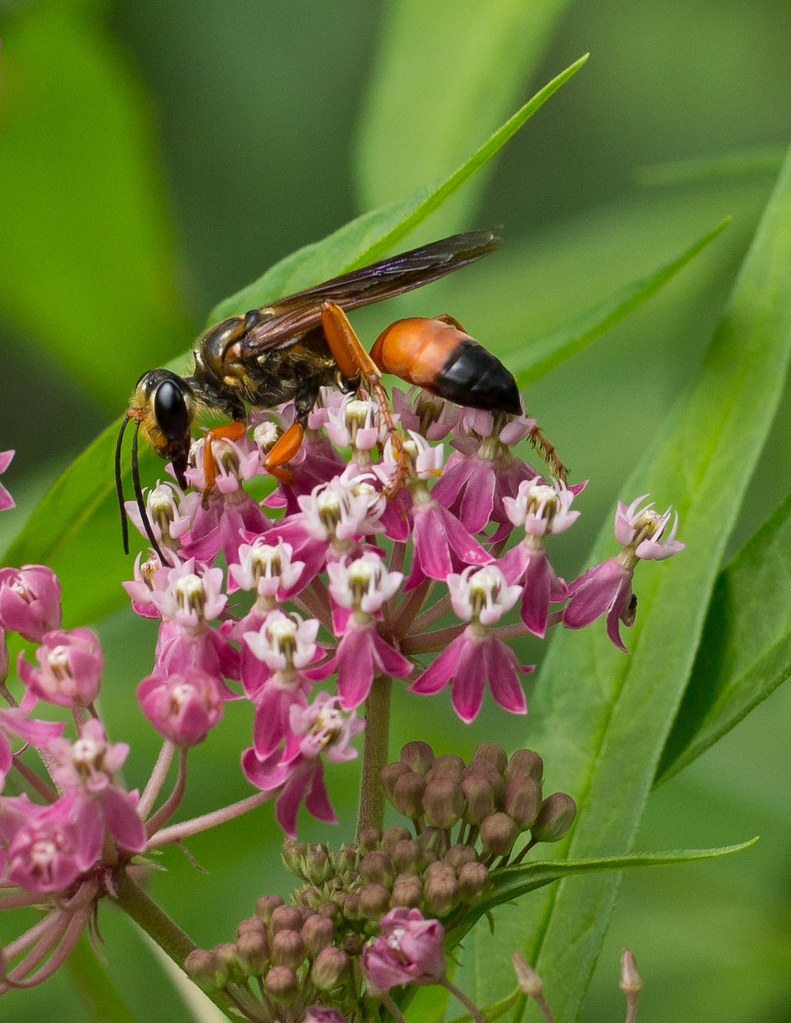
The Great Golden Digger Wasp (Sphex ichneumoneus) is a striking insect found throughout Texas.
It features a black body with golden hairs on its head and thorax, making it easy to identify in gardens and landscapes.
These wasps range from one-half to over one inch in length.
Eastern specimens typically have dark wings, while western varieties display clearer wings.
The wasp’s abdomen is black with distinctive orange or red markings on the first 2-3 segments.
Despite their intimidating appearance, Great Golden Digger Wasps are generally non-aggressive toward humans.
They’re actually beneficial insects that help control garden pests.
These solitary wasps earned their name “ichneumoneus” from the Greek word for “tracker.”
They expertly hunt their prey, which typically includes:
- Grasshoppers
- Katydids
- Crickets
The hunting behavior of these wasps is fascinating. They sting and paralyze their prey before dragging them back to their underground nests.
The paralyzed insects serve as food for their developing larvae.
Female digger wasps create elaborate tunnel nests in the soil. Each tunnel contains several chambers where she places paralyzed prey alongside her eggs, ensuring her offspring have fresh food upon hatching.
Many homeowners spot these distinctive wasps in gardens during summer months when they’re most active.
Their presence usually indicates a healthy ecosystem with minimal pesticide use.
8. Blue-winged Wasp
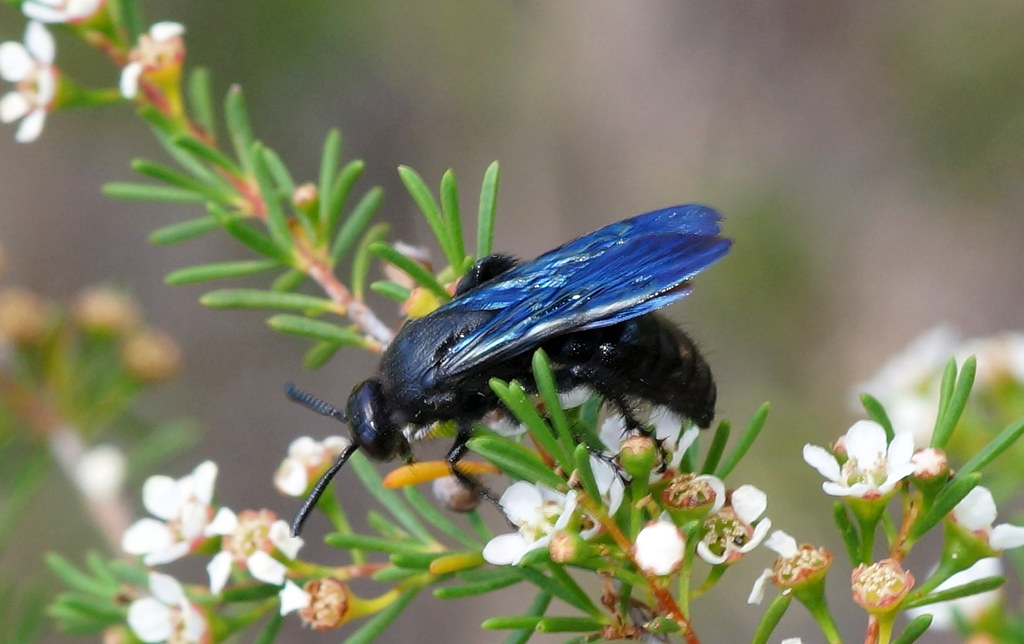
The Blue-winged Wasp (Scolia dubia) is a striking insect commonly found in Texas during late summer and fall.
This wasp measures between 0.8-1.0 inches (2.0-2.5 centimeters) in length, making it quite noticeable when spotted in gardens.
Distinguished by its unique coloration, Scolia dubia has a black body with two yellow spots on its abdomen.
True to its name, it features wings with a beautiful blue-purple iridescence that shimmers in sunlight.
These wasps play a beneficial role in Texas ecosystems. They serve as natural pest controllers by targeting grubs of various beetle species, particularly Japanese beetles.
The female wasp hunts by burrowing into soil to find these grubs.
When a female locates a grub, she paralyzes it with her sting and lays an egg on it.
The wasp larva then feeds on the living grub, providing a natural form of pest control in Texas gardens and landscapes.
Despite their intimidating appearance, Blue-winged Wasps are generally non-aggressive toward humans.
They’re solitary wasps rather than social nest-builders like yellow jackets.
Male Blue-winged Wasps can be spotted visiting flowers for nectar, serving as pollinators.
Females only feed on nectar as adults but hunt grubs for their offspring.
Texas gardeners often appreciate these wasps for their role in controlling destructive beetle populations without the need for chemical pesticides.
9. Mud Dauber
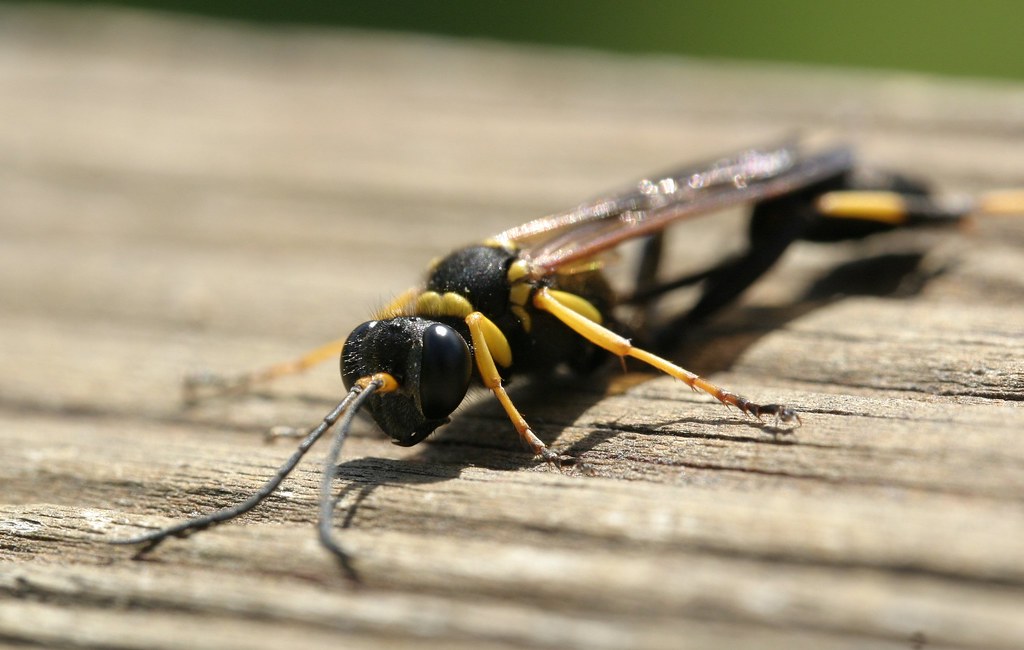
The Mud Dauber wasp (Sceliphron caementarium) is a distinctive insect found throughout Texas.
Also known as the “yellow-legged mud-dauber” or “black-and-yellow mud dauber,” these wasps have slender bodies with a thread-like waist connecting their thorax and abdomen.
These wasps get their name from their unique nest-building behavior.
They construct nests using mud collected from puddles and wet areas, forming small tube-like chambers.
Appearance:
- Length: 1-1.5 inches
- Color: Black body with yellow markings on legs
- Distinctive thread-like waist
- Long, slender body
Despite being capable of stinging, mud daubers are rarely aggressive toward humans.
They typically only sting when directly handled or threatened, making them less dangerous than other wasp species.
Mud daubers are actually beneficial insects. They help control spider populations by hunting and paralyzing spiders to feed their larvae.
Each mud cell in their nest contains several paralyzed spiders that serve as food for developing young.
The lifecycle of these wasps involves the female laying eggs in mud chambers, provisioning each cell with paralyzed spiders, then sealing it.
When the larvae hatch, they feed on the spiders before pupating and emerging as adults.
Removing mud dauber nests is relatively simple with a putty knife or similar tool.
However, since they’re beneficial and non-aggressive, many experts recommend leaving them alone unless they’re in high-traffic areas.
10. Four-toothed Mason Wasp
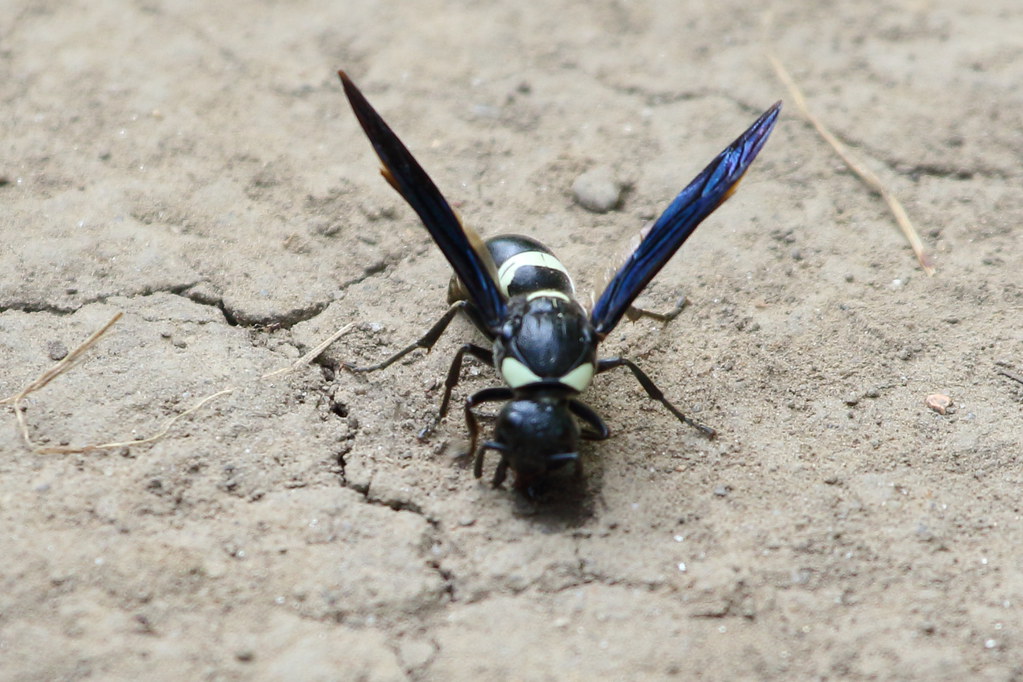
The Four-toothed Mason Wasp (Monobia quadridens) is a beneficial solitary wasp commonly found throughout Texas.
This striking black wasp features distinctive white markings and is often mistaken for the more aggressive bald-faced hornet.
These wasps typically measure about 3/4 to 1 inch long. Their most notable feature is their black body with white or cream-colored markings, particularly on the face and abdomen.
Unlike social wasps, Four-toothed Mason Wasps live independently.
They don’t form colonies or build paper nests. Instead, they create nests in wood borings or sometimes in dirt banks.
![Four-toothed Mason Wasp appearance – black with white markings]
Nesting Habits:
- Often uses abandoned beetle tunnels in wood
- Sometimes takes over abandoned carpenter bee nests
- Seals nest cells with mud
Female wasps provision their nests with caterpillars, particularly from the Pyralidae family.
They paralyze the caterpillars before placing them in nest cells as food for their developing larvae.
Gardeners should welcome these wasps as they help control pest caterpillar populations.
Despite their intimidating appearance, Four-toothed Mason Wasps rarely sting humans unless directly handled or threatened.
They’re most active during summer months when they can be spotted visiting flowers like goldenrod and thoroughwort.
In Texas, a similar species called Monobia texana also exists.