Types of Yellow Sac Spiders: Identify, Compare, and Stay Safe

You might be surprised to learn that those small, pale spiders you occasionally spot crawling across your ceiling at night belong to a diverse group with over a dozen distinct species.
Yellow sac spiders are small, nocturnal hunters found across North America, Europe, and Asia, each with unique characteristics that set them apart from common house spiders.
These pale yellow to light green spiders are active hunters that build silk sacs for daytime retreats rather than traditional webs, making them different from most spiders you encounter in your home.
While yellow sac spider identification can be tricky due to their similar appearance, understanding the key differences between species like the northern yellow sac spider and other variants helps you recognize what you’re dealing with when you spot one indoors.
From the common Agrarian Sac Spider found throughout North America to lesser-known European species, each type of yellow sac spider has adapted to specific environments and climates.
Whether you’re concerned about yellow sac spider bites or simply curious about these nocturnal spiders sharing your living space, knowing how to distinguish between different species gives you valuable insight into their behavior and potential risks.
Agrarian Sac Spider
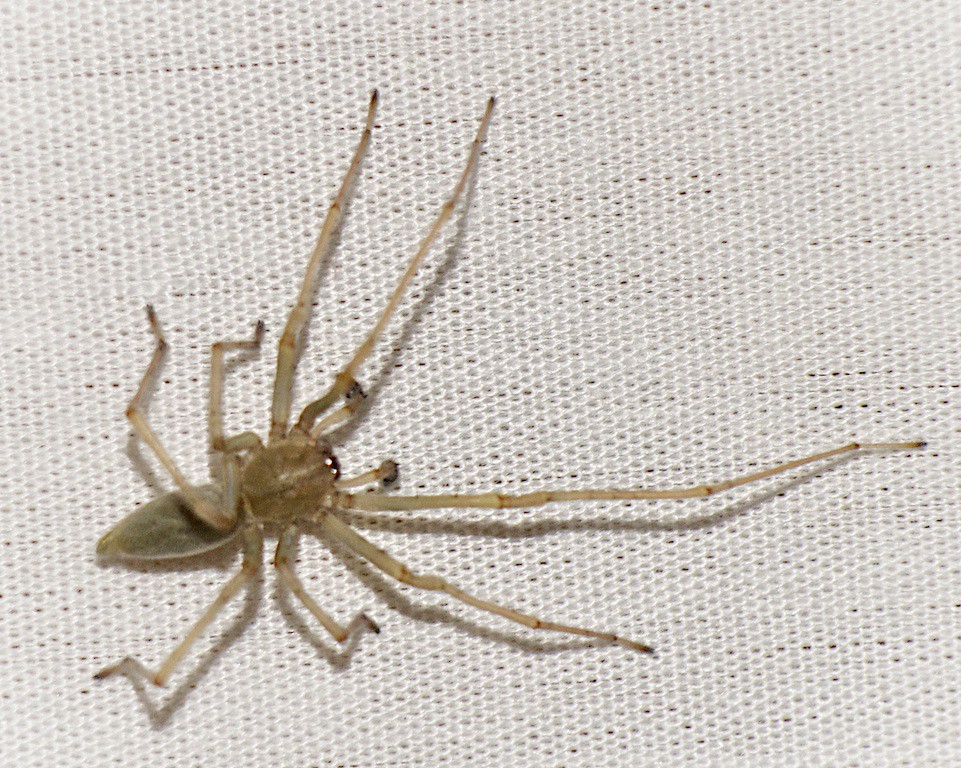
The Agrarian Sac Spider (Cheiracanthium inclusum) is indigenous to North America and belongs to the family Cheiracanthiidae. You’ll recognize this species by its pale yellow to cream-colored body with distinctive dark markings on the tips of its legs.
Physical Characteristics:
- Body length: 4-9mm
- Leg span: Up to 1 inch (2.5 cm)
- Color: Pale yellow-beige with dark brown feet
- Eyes: 8 similarly sized eyes in two rows
You can find these spiders throughout North, Central, and South America, plus the West Indies. They’ve also been introduced to parts of Africa.
Habitat and Behavior
These nocturnal hunters don’t build webs to catch prey. Instead, you’ll find them actively hunting insects and other small arthropods at night. During the day, they retreat to small silk sacs they construct in under 10 minutes.
You might encounter them in trees, shrubs, or inside your home. They’re excellent travelers, using silk threads to balloon between locations or create bridges to new areas.
Reproduction and Life Cycle
Female agrarian sac spiders mate only once and produce 1-5 egg masses. Each mass contains 17-85 eggs, though some can have up to 112 eggs. Females guard their eggs for about 17 days until the spiderlings molt.
Males mature faster than females, reaching sexual maturity in about 119 days compared to 134 days for females.
Long-Legged Sac Spider
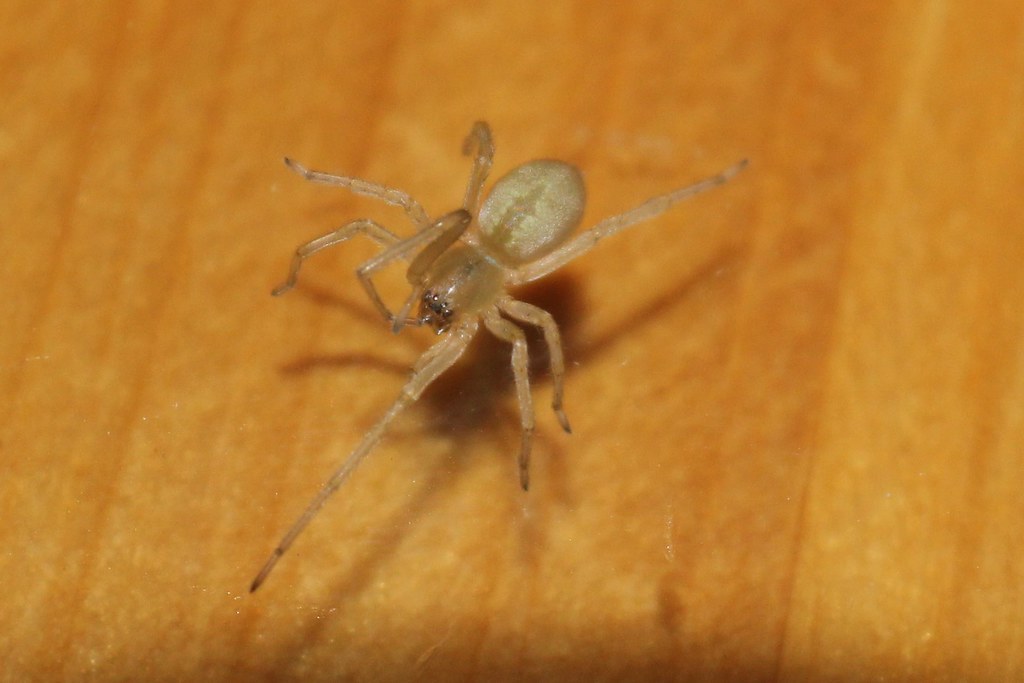
The northern yellow sac spider (Cheiracanthium mildei) is one of the most common spiders you’ll encounter in your home. This small hunter originally came from Europe but now lives throughout North America.
Physical Appearance
You can identify this spider by its pale yellow or light green body color. The long-legged sac spider has a darker thorax than its abdomen. Its abdomen shows a center marking that gets thicker at the waist area.
The spider measures about 5-10 mm in body length. Its legs are long and thin, which gives it excellent climbing ability. You’ll notice the front pair of legs is longer than the others.
Behavior and Habitat
This spider doesn’t build webs to catch prey. Instead, it hunts actively at night for small insects. During the day, it hides in a silk sac it builds in corners, behind furniture, or in folded clothes.
You might find these spiders in your bedroom, bathroom, or garage. They like quiet spots where they won’t be disturbed. Outside, they live under rocks, bark, and leaf piles.
Bite Information
While bites can happen, they’re not dangerous to most people. You might feel pain similar to a bee sting with some redness and swelling. The symptoms usually go away within a few days with basic care.
| Feature | Description |
|---|---|
| Size | 5-10 mm body length |
| Color | Pale yellow to light green |
| Legs | Long, thin, front pair longest |
| Eyes | 8 eyes in two rows |
| Activity | Nocturnal hunter |
Cheiracanthium lawrencei
You’ll find Cheiracanthium lawrencei primarily in South Africa, where it’s known as one of the most medically significant spiders in the region. This species was previously called Cheiracanthium furculatum before scientists reclassified it.
Cheiracanthium lawrencei is responsible for 70-90% of all spider bites in South Africa. This makes it the most common biting spider you’ll encounter in the country.
Physical Characteristics
| Feature | Description |
|---|---|
| Body Color | Pale yellow to light brown |
| Size | 8-12 mm body length |
| Legs | Long and thin, darker at tips |
| Eyes | Eight eyes in two rows |
Where You’ll Find Them
You can spot these spiders in gardens, shrubs, and grasslands throughout South Africa. They build silk sacs in vegetation during the day and hunt at night.
Like other yellow sac spiders, they don’t spin webs to catch prey. Instead, they actively hunt insects and small arthropods.
Bite Effects
If you’re bitten by C. lawrencei, you might experience:
- Sharp, immediate pain
- Redness and swelling
- Possible skin irritation lasting several days
- Rarely, mild tissue damage at the bite site
The bite is painful but typically not life-threatening. You should clean the wound and seek medical attention if symptoms worsen or don’t improve within a few days.
Cheiracanthium punctorium (Also Called the Yellow Sac Spider in Europe)
The European Yellow Sac Spider is one of the largest members of its family. You’ll find this spider across central Europe to Central Asia.
Physical Features:
- Size: Up to 15 mm in body length
- Color: Bright yellow or yellow-green
- Legs: Long and thin, matching body color
- Eyes: 8 eyes arranged in two rows
This species stands out because it’s much bigger than other yellow sac spiders you might encounter. Its vivid yellow color makes it easy to spot in nature.
You’ll typically find these spiders in open grassy areas and meadows. They build tubular silk sacs between leaves where they rest during the day. Unlike their indoor cousins, these spiders prefer staying outside.
Behavior and Hunting:
The European Yellow Sac Spider hunts at night. It doesn’t build webs to catch prey. Instead, it actively searches for insects and small creatures to eat.
This spider can be more defensive than other yellow sac spiders. It may bite more quickly when you disturb it.
Bite Information:
The bite feels similar to a wasp sting but might be slightly worse. You could experience sharp pain, redness, and swelling. Some people get mild headaches or feel sick, but serious problems are very rare.
The spider’s bite can penetrate human skin due to its larger size compared to other yellow sac spiders.
Cheiracanthium japonicum
The Japanese Yellow Sac Spider is a fascinating species you might encounter in East Asia. This spider shares many traits with its North American and European cousins but has adapted to local environments.
You can identify this spider by its pale yellow or cream-colored body. It measures between 6-9 mm in body length. The legs are long and often slightly darker at the joints.
Physical Features:
- Body color: Pale yellow to cream
- Size: 6-9 mm body length
- Legs: Proportionally long with darker joints
- Eyes: 8 eyes in two rows
- Build: Similar to C. mildei and C. inclusum
You’ll find this spider in both rural and urban areas across Japan, Taiwan, parts of China, and Korea. It commonly hides in homes, gardens, warehouses, and greenhouses.
Like other yellow sac spiders, it prefers staying hidden during the day. You might discover it in folded fabric, storage boxes, or building corners. It becomes active at night to hunt small insects.
This spider is shy and fast-moving. It avoids human contact whenever possible. During the day, it rests in silken sacs that give the species its common name.
Bites from this species are uncommon. They typically happen when you accidentally press the spider against your skin. If bitten, you might experience slight pain, redness, and itching. These symptoms usually go away on their own without needing medical treatment.
The Japanese Yellow Sac Spider plays an important role in controlling pest insects in both natural and urban environments.
Cheiracanthium gratum
You’ll find Cheiracanthium gratum in Eastern Europe and parts of Central Asia. This lesser-known yellow sac spider isn’t as common as other species in its family.
Physical Features
- Light yellow to pale green body
- 6-8 mm in body length
- Thin legs that match the body color
- Smooth, shiny appearance with translucent legs
You might confuse this spider with other yellow sac spiders because they look very similar. The main difference is where you find them.
Where They Live
You’ll spot these spiders in fields, meadows, and forest edges. They build silk sacs in tall grass or between plant leaves during the day. If your home is near thick vegetation, they might wander inside.
Behavior and Diet
These spiders hunt at night and avoid people when possible. You won’t find them building webs to catch prey. Instead, they actively search for small insects and other tiny creatures.
During the day, they rest inside their silk sacs. These retreats protect them from predators and weather.
Bite Information
Bites from this spider are very rare since they prefer to stay outdoors. If you do get bitten, you might experience:
- Mild swelling at the bite site
- Light itching or discomfort
- Minor redness that fades quickly
The symptoms usually go away on their own without medical treatment. Serious reactions almost never happen with this species.
Cheiracanthium erraticum
You’ll find this yellow sac spider across Europe and parts of Asia. The Two-Clawed Cheiracanthium gets its name from the two prominent claws on each foot.
Physical Features
- Body length: 5-8 mm
- Color: Yellow to yellow-green
- Legs: Long, thin, and built for quick movement
- Appearance: Translucent body with smooth texture
Your best chance of spotting one is in natural outdoor settings. They prefer bushes, tall grass, and hedgerows over indoor spaces.
Where You’ll Find Them
You can locate these spiders in grasslands, crop fields, and shrub areas. They build silken sacs among leaves or grass stems during the day. You won’t see them active until dusk approaches.
Hunting Behavior
These spiders are solitary hunters that rely on speed and stealth. You won’t find any catching webs since they actively chase down small insects and larvae. They ambush their prey rather than waiting for it to get trapped.
Bite Information
Your chances of getting bitten are very low. If it does happen, you’ll experience mild symptoms like slight stinging, small amounts of swelling, and redness. The discomfort typically goes away within 1-2 days without any treatment needed.
These spiders avoid human contact whenever possible. You’re most likely to encounter them while gardening or working in areas with dense vegetation.